
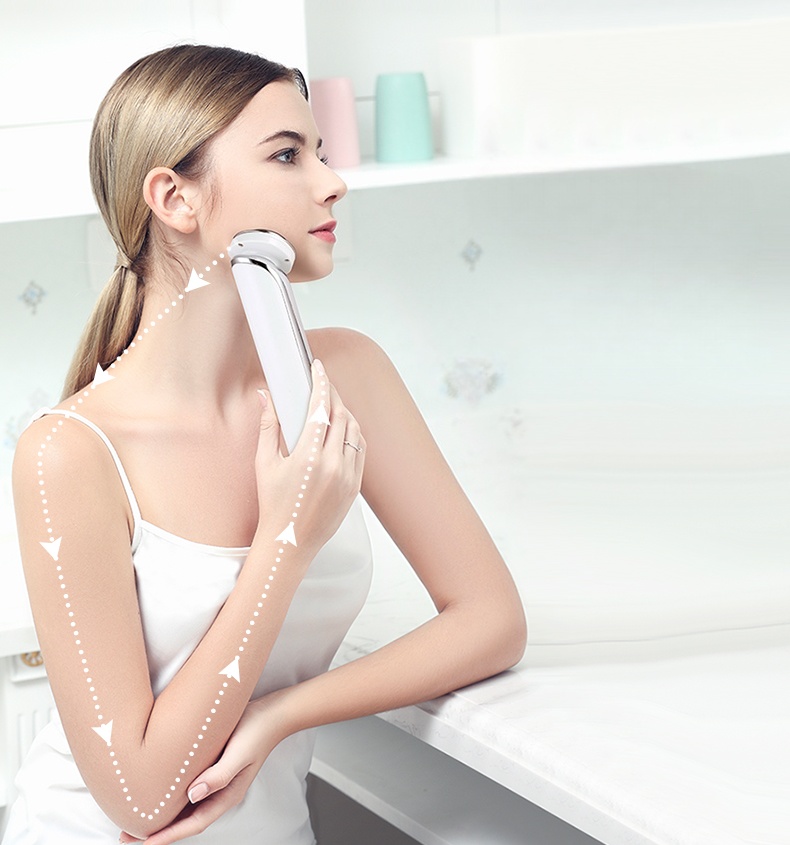
Recently many young ladies have been recommending various home-use radiofrequency beauty devices. Even Fan Bingbing has launched her own brand of home-use radiofrequency beauty devices. But do these thousands of home-use radiofrequency beauty devices really have any effect? And how is it different from medical-grade radiofrequency? Should young ladies go crazy and buy them, or should they be cautious and recommend them rationally?
What is radiofrequency beauty?
Radiofrequency is a type of high-frequency alternating electromagnetic wave with a frequency ranging from 300KHz to 300GHz. Radiofrequency can penetrate the epidermis and act on deep tissues. Through the rapid alternating electromagnetic field, it causes the water molecules in the tissue to move (rotate) and generate frictional heat, heating the collagen fibers to around 55-65℃. The heat energy can lead to immediate collagen fiber contraction. Additionally, the thermal damage caused by radiofrequency can trigger the skin’s repair and regeneration, continuously stimulating collagen protein repair and new growth, thereby improving skin laxity and aging problems caused by collagen loss.
In simple terms, when radiofrequency is applied to the skin, the electromagnetic waves generate heat energy that can heat the dermis. After heating, the collagen cells under the skin will contract and tighten, promoting new collagen cell growth, allowing the skin to reach a firm, plump, and elastic state.
Classification of radiofrequency
Radiofrequency can be divided into single-pole radiofrequency and bipolar (multi-pole) radiofrequency.
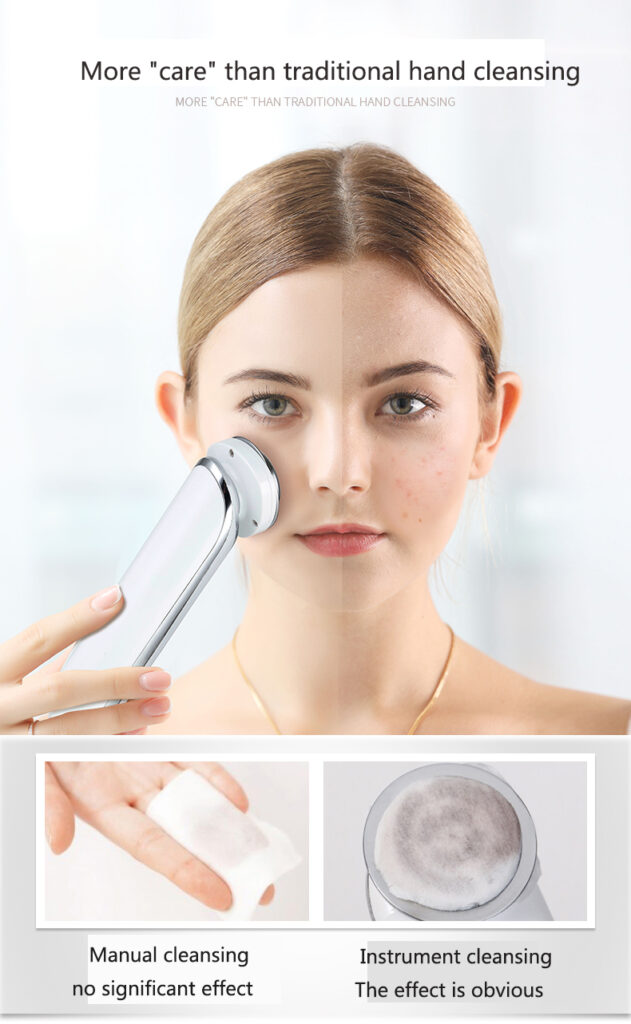
1. Single-pole radiofrequency is currently the mainstream in the medical beauty market.
According to different technologies, it can be further divided into:
Quasi-single pole: The beauty device with quasi-single pole has high energy and can directly radiate to the subcutaneous layer, with deep penetration and stronger pain. The single treatment effect is significant. Patients need to connect electrode pads to form a circuit and be equipped with a cooling device for freezing.
Phase single pole: Utilizing water molecule resonance heating significantly improves comfort and safety. Phase single pole radiofrequency is suitable for deep heating but still cannot precisely control the penetration depth.
Focused single pole: Directly focuses on the SMAS fascia layer under the skin. It breaks through the traditional radiofrequency heating mode from surface to inside and solves the problem of shallow action layer and inability to heat the fascia layer.
2. Bipolar (multi-pole) radiofrequency: The bipolar radiofrequency contains positive and negative poles, with energy distributed between the electrodes. The depth of action is shallow, and the controllability is stronger, making it safer. Due to the certain limitations when applied to home-use radiofrequency beauty devices, various brands have made different improvements based on the bipolar radiofrequency principle, resulting in terms like quad-pole, multi-pole, which are actually marketing gimmicks. The technical principle of multi-pole is similar to N positive and negative poles working on the same interface, which is basically “multiple pairs of bipolar”, based on the bipolar principle.
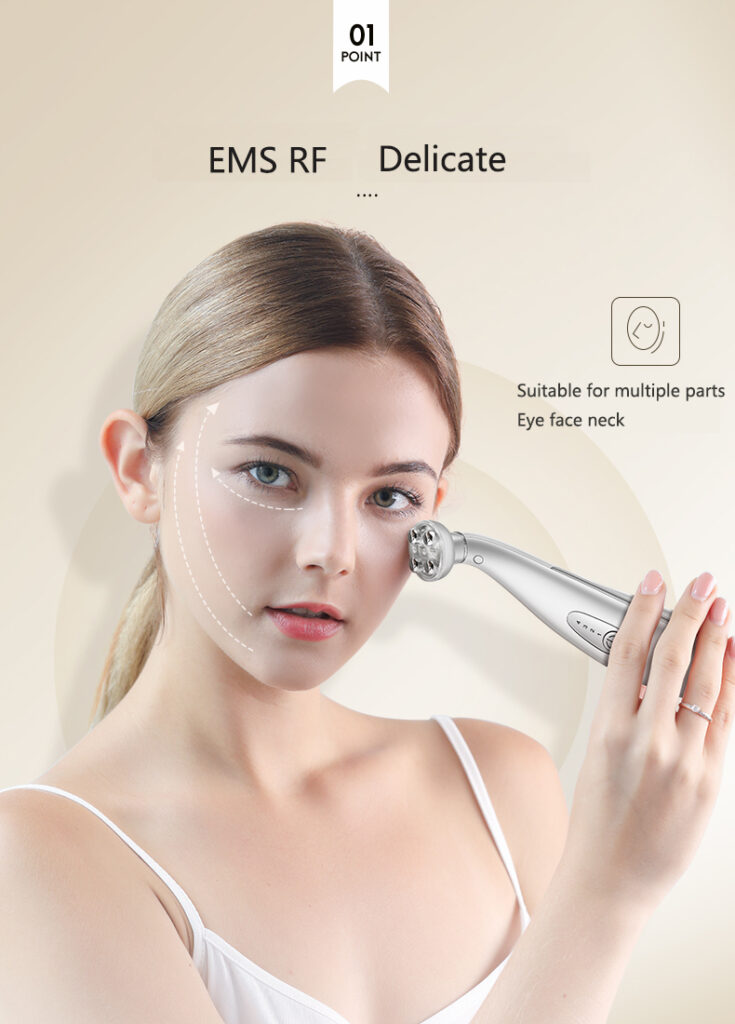
The difference between medical and home-use radiofrequency devices
The biggest difference between medical and home-use radiofrequency devices is the effect caused by the difference in energy. Medical radiofrequency has a more significant effect, not only can it be presented through photos, but others can also see the obvious change in your skin texture. While the effect of home-use radiofrequency devices is that you can feel a change yourself, but this change is hardly visible in photos and is difficult for others to notice.
Can medical and home-use radiofrequency devices replace each other?
No, but they can be combined and used together. Home-use radiofrequency beauty devices are more suitable for daily skin care or for extending the maintenance effect after medical beauty procedures. If your skin aging and laxity are severe, it is recommended to seek professional doctors in a regular hospital for solutions.
Can home-use radiofrequency devices dissolve fat?
Home-use radiofrequency beauty devices are household electrical products, mainly focusing on safety of use, with power controlled within safe limits. Moreover, the energy of home-use radiofrequency beauty devices can only act on the dermis layer. Fat is located in the deeper part of the skin and cannot be effectively heated and heated.
Self-test to see if you are suitable for purchasing a home-use radiofrequency beauty device
1. Your skin problems are not severe, with minor wrinkles or slight skin laxity, and you have the desire to improve your skin condition, but you do not have high expectations for the effect of using a home-use radiofrequency beauty device. Young ladies. 2. It’s not that she is too lazy. She is a girl who can consistently perform daily skin care routines. If she is too lazy to even do basic skincare, then she won’t be able to use the home radiofrequency beauty device consistently, and it will just be left idle after purchase.
3. This is for girls who have already undergone radiofrequency medical beauty treatments in the hospital and want to extend the maintenance effect.
Who is not suitable for radiofrequency beauty treatment?
1. Pregnant or lactating women
2. Patients with implanted electronic devices such as cardiac pacemakers
3. Patients with damaged or inflamed treatment areas
4. Those with facial fillers
5. Patients with severe heart disease, diabetes, or hyperthyroidism.
