
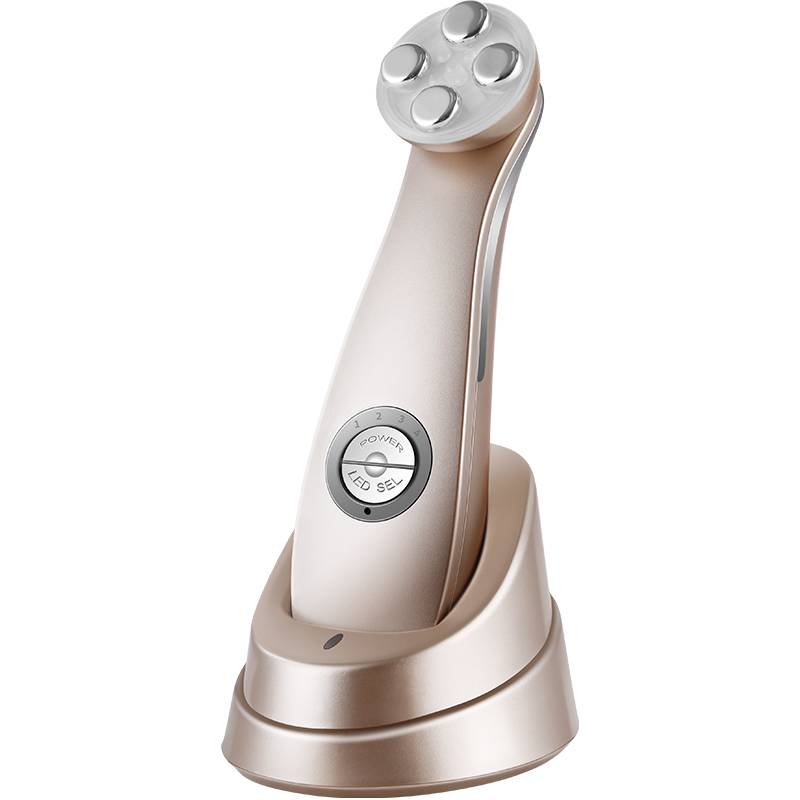
As the “appearance-level economy” continues to heat up, consumers’ demand for convenient and efficient beauty care has been constantly upgrading, and the beauty instrument industry has entered a period of rapid development. According to the statistics and predictions of Beijing Hengzhou Bozhi International Information Consulting Co., Ltd. (QYResearch), the global beauty instrument market is currently in a golden stage of steady expansion, with significant regional market differentiation. Technological innovation and compliant development have become the core keywords of the industry, and it also holds vast market opportunities.
I. Overview of the Global Beauty Instrument Market
From the perspective of the global market size, the industry has a strong growth momentum and sufficient potential. In 2025, the global beauty instrument market sales have reached 96.24 billion US dollars, with production climbing to 141.12 million units, and the average selling price being 682 US dollars per unit. The overall industry gross profit margin remains within a reasonable range of 30%-50%, demonstrating a good profit level. Looking forward, it is expected that by 2032, the global market sales will exceed 270 billion US dollars, reaching 271.25 billion US dollars, with a compound annual growth rate (CAGR) of 16.1% during the period from 2026 to 2032, and the industry growth momentum will continue to be released.
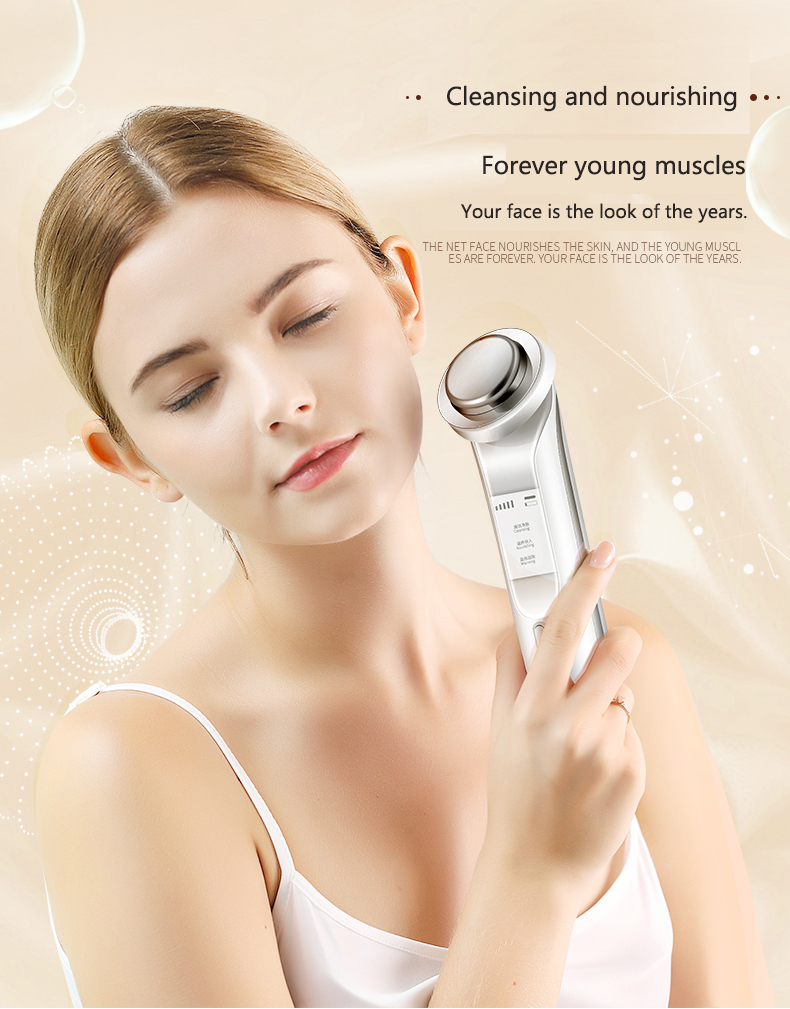
Specifically, beauty instruments are personal care devices centered on “energy or mechanical action” to achieve skin and body surface care effects. Currently, the two main scenarios are for home use and light professional use, and the product coverage is relatively wide. Among them, facial cleansing and introduction types (ions, ultrasound, thermal technology), firming and anti-aging types (radiofrequency RF, microcurrent, EMS), optical care types (LED phototherapy, laser), hair removal types (IPL, home laser), and acne removal and soothing, eye area and neck care, etc., have become the most concentrated areas of market demand.
From the perspective of the industry structure, beauty instruments currently have a very clear industry division of labor, and everyone is developing collaboratively. The core links in the upstream are concentrated on the supply of various components and modules, including light sources and drivers (LED arrays, IPL lamp tubes and filters, high-voltage pulse power supplies, etc.), RF/microcurrent power devices and control modules, temperature control and heat dissipation components, skin perception sensors, MCU and algorithms, lithium batteries and charging management systems, as well as various optical components and structural materials, which are the core support for product performance; the middle stage is mainly composed of brand manufacturers, system integrators and ODM manufacturers, responsible for product research and development, production and assembly, connecting the upstream and downstream industries; the downstream directly reaches end consumers through e-commerce platforms, professional beauty retail stores, DTC models, cross-border channels, and some salons, skin management institutions, etc., where e-commerce channels, with their convenience advantages, have become the fastest-growing sales channel in recent years.
II. Development Characteristics of Global and Chinese Regional Markets
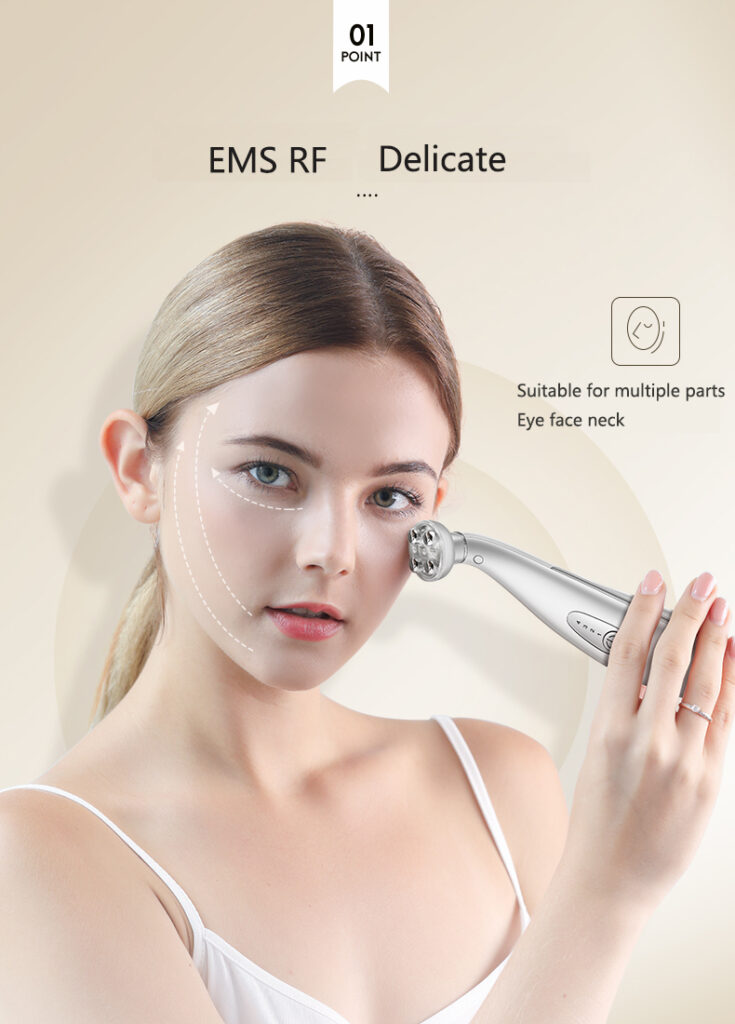
The global beauty instrument market has a high concentration, and regional development differences are significant, forming a market pattern of “Europe and America leading, Asia-Pacific leading”. Among them, the North American region is a dual innovation center for technology and market, gathering many industry-leading equipment manufacturers. Local consumers have an extremely high acceptance of minimally invasive and non-invasive beauty technologies, and the market maturity is high, making it the core consumer market for high-end beauty instruments in the world; the European market is known for its stability, with a strict regulatory system. All beauty instruments must comply with the EU medical device regulations, product safety and compliance have become the core threshold for market entry, and the market growth is stable.
The Asia-Pacific region (especially China, Japan, and South Korea) has become the core growth engine of the global beauty instrument market, with a high-speed growth and diversified product characteristics. Among them, the Chinese market has had the most rapid development in recent years, driven by the rise of the “appearance-level economy”, residents’ consumption upgrading, and the support of a large middle-class group, the market size has continued to expand. Based on the latest industry data, the market size of beauty equipment in China reached 6880 million US dollars (approximately 4816 billion RMB) in 2025, accounting for 7.15% of the global market; it is expected that by 2032, the market size in China will increase to 20480 million US dollars, and at that time, the global share will rise to 7.55%, becoming the core driving force for the growth of the global market.
The Japanese and Korean markets have formed a unique development model relying on mature beauty culture, meticulous consumer demands, and strong local brand advantages. Local brands, by accurately grasping consumer demands, have continuously broken through in product design and functional innovation, occupying the dominant position in the local market and also having certain competitiveness in the global market. It is worth noting that the adjustment of the US tariff policy in 2025 has brought significant uncertainty to the global beauty equipment market. Changes in tariffs and the strategies of various countries to respond will further affect the competitive situation of the global market, regional economic linkage, and the reconfiguration of the industrial chain and supply chain.
Currently, the main participating manufacturers in the global beauty equipment market include international well-known brands and domestic leading enterprises, such as Procter & Gamble, Philips, Panasonic, Nu Skin Enterprises, Hitachi, FOREO, YA-MAN, Conair, Silk’n’s, MTG Corporation, Tripollar, NuFACE, etc., as well as international brands like Jin Dao, Artistic & Co., Shenzhen Sike Three-Dimensional Technology, Tria Laser, JUJY, Hangzhou You Lai Technology, L’Oréal, etc., with increasingly fierce market competition.
III. Industry Segmentation Market Layout
From the perspective of product types, beauty equipment can be divided into cleaning devices, oxygen and steam cookers, skin rollers, acne removal devices, hair removal devices, and other categories. Among them, hair removal devices, cleaning devices, and tightening and anti-aging devices have become the fastest-growing sub-categories in terms of market demand in recent years; from the perspective of action mechanisms, they mainly include radio frequency heat energy, micro current/EMS, electro-penetration/ion, ultrasound, LED/light energy, IPL/laser, mechanical vibration/negative pressure, etc. Each technology, with different care effects, covers different consumer needs; from the perspective of usage scenarios, it can be clearly divided into two major sections: home consumer level and medical beauty professional level. The home consumer level, with its convenience and high cost-effectiveness advantages, has a faster market growth rate and has become the main driving force of industry growth; from the perspective of application scenarios, it mainly focuses on beauty salons, home, and other fields. The demand in the home scenario has continued to increase, becoming the core application scenario.
IV. Analysis of Global Beauty Equipment Market Opportunities
In the context of rapid industry development, the global beauty equipment market contains multiple development opportunities, mainly concentrated in technological integration innovation, sub-segment demands, ecosystem construction, and regional expansion.
Firstly, technological integration innovation brings new opportunities. With the continuous development of cutting-edge technologies such as artificial intelligence, big data, and biotechnology, the integration of beauty equipment with these technologies is increasingly deep, becoming the core direction of industry innovation. For example, through AI technology to achieve personalized skin analysis and diagnosis, combined with big data to provide customized care plans for consumers, improving product usage experience; the research and promotion of wearable beauty devices and miniaturized home instruments have further lowered the usage threshold for consumers, expanded the market coverage, and injected new impetus into industry growth.
Secondly, the potential of sub-segment demands is huge. Currently, consumers’ beauty demands are becoming increasingly refined and personalized. Different age groups, skin types, and consumers with varying purchasing power have distinct demands for beauty equipment. For instance, young consumers focus more on basic care needs such as cleansing and acne removal, middle-aged consumers pay more attention to firming, anti-aging, and wrinkle reduction functions, and male consumers’ demand for beauty equipment is gradually awakening. Focusing on various niche demands and launching targeted products can help enterprises seize niche market shares and achieve differentiated development.
Thirdly, the “hardware + software + service” ecosystem construction has become a new competitive focus. In the future, the simple competition of hardware products will gradually escalate into an ecosystem competition. Brands that can integrate hardware devices, supporting software (such as care guidance, effect monitoring), and value-added services (such as after-sales maintenance, professional consultation) will have greater market competitiveness. This ecosystem model can enhance consumer stickiness, strengthen brand trust, and also increase product value-added, expanding profit margins.
Fourthly, emerging markets and the globalization of home care habits bring new spaces. Currently, mature markets such as Europe, America, China, and South Korea still dominate, but emerging markets such as Southeast Asia, Latin America, and the Middle East, with economic development, increased residents’ consumption capacity, and the popularization of beauty concepts, are gradually releasing market potential. At the same time, the globalization of home care habits has led to a continuous growth in consumers’ demand for home beauty equipment, further expanding the industry’s market boundaries. Additionally, the compliant development of the Chinese market will also promote the industry’s healthy development, providing a broader development space for compliant enterprises.
Conclusion of Industry Development
Overall, the global beauty equipment industry will maintain a high growth rate from 2025 to 2032, with a continuously expanding market size and a compound annual growth rate of 16.1% or higher. The overall development prospects of the industry are broad. The global market presents a “Europe and America leading, Asia-Pacific leading” pattern. China, as the core market in the Asia-Pacific region, with the advantages of consumption upgrading and demand release, its market size and global share will continue to increase, becoming the core driving force for global industry growth.
Industry development has entered a new stage. “Deep technology, compliant qualifications, excellent experience, and brand trust” have become the core keywords defining industry development. Technological innovation and compliant development will become the key to the survival and development of enterprises. The simple marketing-driven development model is no longer sustainable. Only by continuously increasing R&D investment, promoting technological integration and innovation, deeply focusing on niche demands, and building a complete “hardware + software + service” ecosystem can enterprises occupy a dominant position in the increasingly fierce market competition.
